
Concerns This Addresses
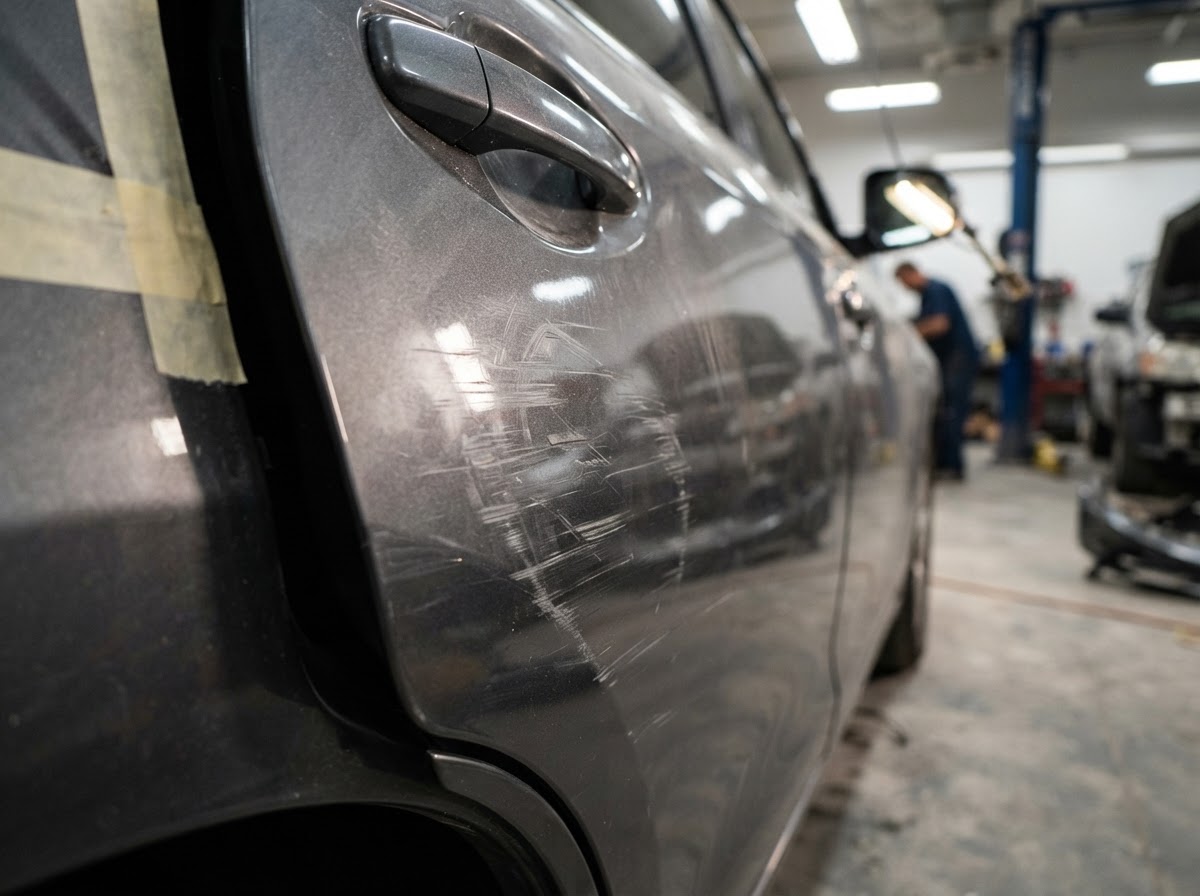
- Light scratches, scuffs, or swirl marks in the finish
- A clear-coat scratch you hope can be buffed out
- Deeper scratches or gouges that may have cut through the paint
- A dull or hazy finish that lost its shine
- You're unsure whether polishing alone will be enough
What the Repair May Involve
- Scratch and paint-damage repair on affected areas
- Polishing and buffing to remove suitable surface imperfections
- Surface preparation, sanding, and finishing
- Refinishing where damage is too deep for polishing alone
- Final smoothing and blending of the repaired surface
Repair or Replace?
Polishing and buffing can remove suitable surface-level imperfections — light scratches, scuffs, and haze. Deeper scratches that cut through the clear coat and color into the substrate or metal generally require refinishing rather than polishing alone. We assess the depth and explain which your damage needs.
What an Assessment Involves
We look at the scratch or imperfection, judge how deep it goes, and check whether it's in the clear coat, the color, or down to the substrate. That determines whether polishing will restore it or whether sanding and refinishing are required.
What Scratch Repair, Polishing & Finishing Addresses
Scratch repair, polishing, and finishing addresses marks and damage in the paint — from shallow scuffs in the clear coat to deeper gouges that reach the color layer or the metal beneath. RPC repairs scratches and paint damage and polishes, buffs, and finishes surfaces to remove suitable imperfections, and we tell you when a deeper mark needs refinishing rather than polishing alone.
The depth of the scratch is what matters most. A scratch that sits in the clear coat can often be polished out; a scratch that cuts through the clear coat and color into the substrate or metal generally needs refinishing — preparing the surface, applying new color and clear coat, and finishing. We assess the depth and explain which your damage needs before any work begins.
This service also covers a dull or hazy finish that has lost its shine. Polishing and buffing can restore gloss and remove suitable surface-level imperfections such as swirl marks and haze. But polishing is not a cure for deeper damage, and we are honest about what it can and cannot fix rather than promising it will remove every mark.
How a Scratch Is Assessed
We look at the scratch or imperfection, judge how deep it goes, and check whether it is in the clear coat, the color, or down to the substrate. That determines whether polishing will restore it or whether sanding and refinishing are required. The assessment is the difference between a quick polish and a proper refinish, and it is based on the actual depth of the damage.
Polishing and buffing level the existing surface to remove suitable imperfections — light scratches, scuffs, swirl marks, and haze that sit in the clear coat. Refinishing involves preparing the surface, applying new color and clear coat, and finishing, and is used when damage is too deep for polishing to correct. The two are not interchangeable, and the right choice depends on the depth.
An in-person assessment matters because the depth of a scratch is hard to judge reliably from a photograph. We do not diagnose a specific vehicle remotely or guarantee that every scratch can be polished out. The reliable recommendation comes from inspecting the vehicle at the shop, where the depth can be checked directly.
Polishing Versus Refinishing — What Your Damage Needs
Polishing and buffing can remove suitable surface-level imperfections — light scratches, scuffs, swirl marks, and haze that sit in the clear coat. They level the existing surface to restore gloss without applying new paint. For shallow marks, polishing is often enough to make the damage disappear and restore the shine.
Deeper scratches that cut through the clear coat and color into the substrate or metal generally require refinishing rather than polishing alone. Refinishing involves preparing the surface, applying new color and clear coat, and finishing so the repaired area blends with the surrounding panels. Scratches that expose bare metal typically need refinishing to seal the surface and restore the finish.
We assess the depth and explain which your damage needs. The goal is to match the approach to the damage — not to polish where refinishing is needed, and not to refinish where a polish would do. That keeps the work honest and the result realistic, and it is why we tell you which applies before any work begins.
Benefits and Limitations of Polishing & Finishing
The benefit of polishing and buffing is restoring gloss and removing suitable surface-level imperfections — light scratches, scuffs, swirl marks, and haze — without the need for new paint. For shallow marks, it can greatly improve the look of the finish and is a lighter-touch approach than refinishing. Done well, it restores the shine the finish lost.
There are honest limits. Polishing will not remove deeper scratches or damage that has cut through the paint; those need refinishing. It also will not fix damage that has reached the metal without sealing and repainting the surface. We do not claim that polishing can remove every scratch, and we are honest about what it can and cannot correct before any work begins.
We also do not diagnose a specific vehicle remotely. The recommendation — polishing or refinishing — comes from an in-person inspection, not a guess from a photo, and reflects what the depth of the damage actually calls for.
Finishing and Aftercare for Repaired Surfaces
After a scratch is repaired or a surface is refinished, the area is finished — which can include polishing and buffing to remove suitable imperfections and restore shine. Final smoothing and blending help the repaired surface read as part of the surrounding finish rather than a visible patch. The finishing step is what makes the repair disappear visually.
If the repair involved refinishing, fresh paint needs time to cure. We provide curing guidance when you collect the vehicle, and we recommend following the specific instructions given for your particular repair and paint system rather than applying a universal timeline. As a general guide, the first weeks after a refinish are when the paint is most vulnerable — gentle hand-washing and avoiding harsh chemicals and automatic brushes helps protect the new finish.
If you notice anything about the finish after collection, contact us and we can discuss it. The most reliable aftercare guidance is the guidance we give you for your specific repair at pickup. We do not invent universal curing periods; the right care depends on the repair and the paint system used.
Preparing for a Scratch or Finish Assessment
When you contact us, your vehicle's year, make, and model helps frame the conversation. A description of the scratch — where it is, how it happened, and how deep it looks — gives us a starting point. If you can, note whether the scratch seems to sit in the clear coat or looks deeper; that helps frame whether polishing or refinishing is likely.
Photos can help with an initial discussion, but the depth of a scratch is hard to judge reliably from an image. If you share photos, they can start the conversation, but whether polishing or refinishing is needed is confirmed in person. Mention whether the finish around the scratch is faded or aged, because that affects how a refinish blends.
An assessment request is an inquiry, not a confirmed appointment. After we see the vehicle we tell you whether polishing is enough or refinishing is needed, what the work involves, and a realistic picture of timing. You can request an assessment by calling (786) 769-1309 or through our Contact page, in English or Spanish.
Why Consider RPC for Scratch Repair, Polishing & Finishing
RPC Autobody Collision LLC repairs scratches and paint damage and polishes, buffs, and finishes surfaces as part of its focus on bodywork and exterior appearance. Scratch and paint-damage repair, polishing and buffing, surface preparation, sanding and finishing, and refinishing where damage is too deep for polishing alone are all part of restoring a finish.
The recommendation stays tied to the inspection. We tell you whether polishing is enough or refinishing is needed, and we are honest about what polishing can and cannot fix — without claiming it removes every scratch or inventing universal curing times. The scope of work reflects what the depth of the damage actually calls for.
Our shop is at 8725 NW 117th St, Units 14–15, Hialeah, FL 33018. Customers from Hialeah, Hialeah Gardens, and the surrounding area come to us for scratch repair, polishing, and finishing. To request an assessment, call (786) 769-1309 or submit a request through our Contact page.
The Repair Process for Scratch Repair, Polishing & Finishing
Understanding how a repair moves from first contact to collection helps you know what to expect. The steps below describe the general path for scratch repair, polishing & finishing. The exact steps depend on what the inspection finds, but the overall path is consistent.
First is the damage assessment. We inspect the vehicle, check the visible damage and the areas around it, and identify the repair work it may need. The assessment is what turns a guess into a plan, and the recommended scope of work — including whether repair or replacement makes more sense for a given component — is based on that inspection and on parts availability.
Next comes the repair itself. Where panels are damaged, we repair or replace them; where the structure has shifted, we straighten and pull it back toward its intended position and re-measure; where components are bent, cracked, or broken, we repair or replace them based on their condition. Disassembly and reassembly are done where needed to access and repair the damage correctly, and we reassemble everything we take apart.
Then comes refinishing where paint is involved. Surface preparation, sanding, applying color, color matching, and finishing bring the repaired or replaced panels back to a consistent finish. Polishing and buffing remove suitable surface imperfections, and where damage is too deep for polishing alone, refinishing is used instead. The finishing step is what makes the repair disappear visually.
Finally, we review the completed work with you and arrange collection. We walk through what was done, answer questions, and provide any aftercare guidance specific to your repair and paint system. An assessment request is an inquiry, not a confirmed appointment, and the timeline becomes clear after the inspection and as the work progresses — we do not promise a fixed completion date in advance.
What to Expect When Contacting the Shop
When you reach out to RPC about scratch repair, polishing & finishing, the conversation starts with what you are seeing and what happened. Your vehicle's year, make, and model helps us understand what is involved; a description of the damage — where it is, how it occurred, and how severe it looks — gives us a starting point. If you have photos, they can help with an initial discussion, though they do not replace an in-person inspection.
We will talk through the damage and what an assessment may involve, and arrange for the vehicle to be seen at the shop. The reliable scope of work comes from inspecting the vehicle in person, where the visible damage and the areas around it can be checked together. We do not diagnose a specific vehicle remotely or guarantee a particular outcome before the inspection.
After the assessment, we outline the recommended scope of work — what can be repaired versus replaced, what the refinishing involves if paint is part of it, and a realistic picture of timing. Pricing and timing depend on the damage, the repair requirements, and parts availability, so they are discussed based on the inspection rather than promised up front.
You can request an assessment in English or Spanish by calling (786) 769-1309 or through our Contact page. RPC Autobody Collision LLC is a single shop at 8725 NW 117th St, Units 14–15, Hialeah, FL 33018; there is no branch or mobile service. When you arrive at the complex, look for Units 14–15 — the unit numbers are what locate us inside the building.
Visiting RPC's Shop
RPC Autobody Collision LLC is a single shop at 8725 NW 117th St, Units 14–15, Hialeah, FL 33018. When you arrive at the complex, look for Units 14–15 — the unit numbers are what locate us inside the building. To request an assessment, call (786) 769-1309 or submit a request through our Contact page. An assessment request is an inquiry, not a confirmed appointment.
Request an Assessment
Contact RPC to discuss your vehicle and the repairs it may need. Call (786) 769-1309 or submit a request — an inquiry, not a confirmed appointment.
Request a Repair Assessment
RPC AUTOBODY COLLISION LLC
(786) 769-1309Get directions8725 NW 117th St, Units 14–15
Hialeah, FL 33018