
Concerns This Addresses
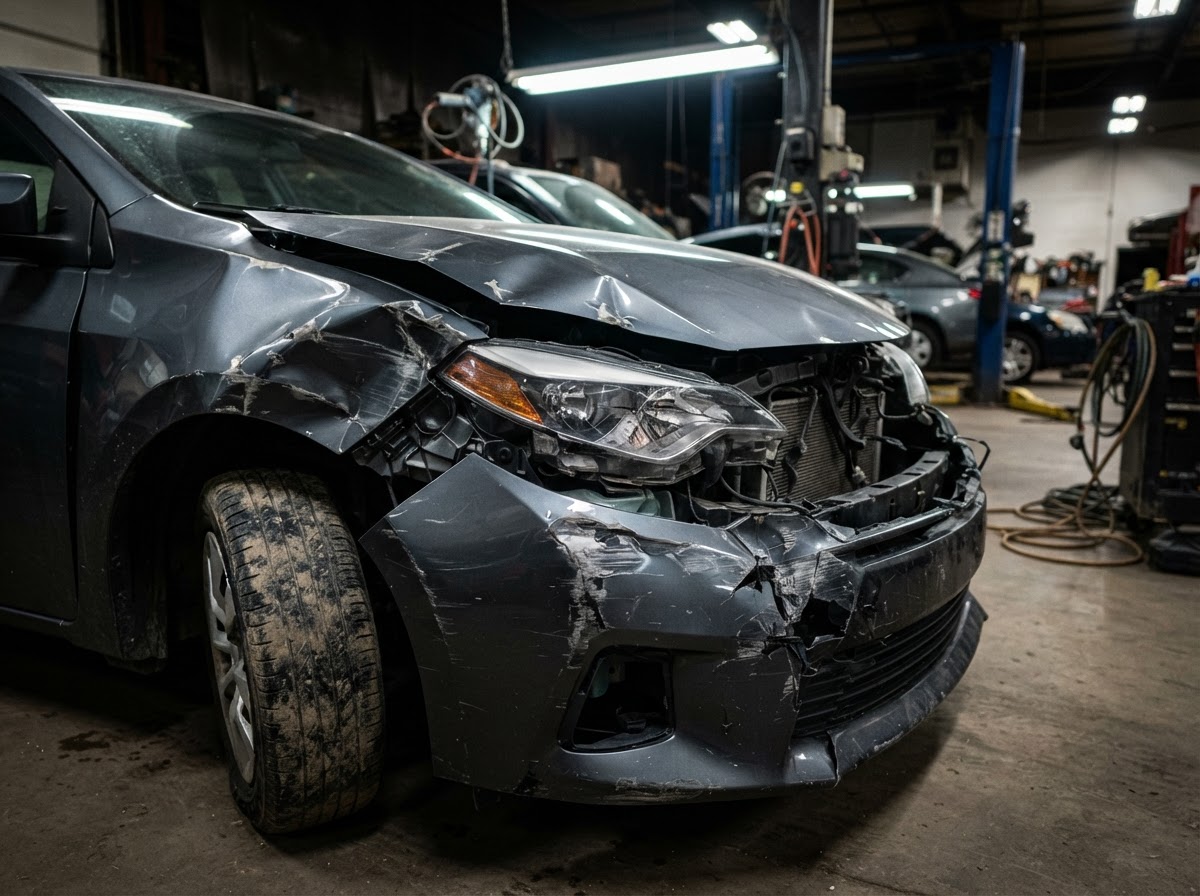
- Crushed or pushed-in body panels after an impact
- Broken or misaligned exterior components
- Gaps and seams that no longer line up after a crash
- Paint that cracked, chipped, or rubbed off on impact
- You're unsure what the full extent of the damage really is
What the Repair May Involve
- Initial damage inspection to determine what the repair may involve
- Body and collision damage repair to affected panels
- Removal and repair or replacement of damaged components
- Disassembly and reassembly of components needed for repair
- Restoration of the vehicle's body and appearance following the collision
Repair or Replace?
During the damage inspection we assess which components can be repaired and which should be replaced. Some damaged panels and parts can be straightened and refinished; others are more cost-effective or safer to replace. The decision depends on the type and extent of the damage and the condition of the affected component.
What an Assessment Involves
An assessment looks at the visible damage, checks adjacent areas for related or hidden damage, and identifies the repair work your vehicle may need. The recommended scope of work — and whether repair or replacement makes more sense — is based on that inspection and on parts availability.
What Collision & Auto Body Repair Addresses
Collision and auto body repair addresses the damage a vehicle's body sustains in an accident — from crushed and pushed-in panels to broken or misaligned components, gaps and seams that no longer line up, and paint that cracked, chipped, or rubbed off on impact. RPC Autobody Collision LLC repairs collision damage to your vehicle's body and helps restore its appearance after the impact.
After an accident, the visible damage is often only part of the story. What looks like a dented panel can hide shifted structure, a broken mounting point, or related damage to an adjacent area that only an inspection reveals. That is why collision repair starts with a damage inspection to determine what the repair may involve, rather than assuming the visible damage is the full scope.
This service covers the body and exterior appearance of the vehicle. We focus on bodywork — collision damage repair, auto body repair, damage inspection, and restoration of the vehicle's appearance following a collision. We do not perform mechanical, engine, transmission, or air-conditioning repair; damage to those systems is outside our scope unless it is part of an approved body repair.
How Collision Damage Is Assessed
An assessment looks at the visible damage, checks adjacent areas for related or hidden damage, and identifies the repair work your vehicle may need. The recommended scope of work — and whether repair or replacement makes more sense for a given component — is based on that inspection and on parts availability. The inspection is what turns a guess into a plan.
Visible damage does not always reveal the full scope of work. A panel that looks lightly dented can sit on shifted structure; a clean-looking hit can have broken mounting points behind it. Checking adjacent areas is part of the assessment because collision energy travels through the body, and the damage at the point of impact is not always the only damage.
We do not diagnose a specific vehicle remotely or guarantee that every damaged component can be repaired. The reliable scope of work comes from inspecting the vehicle at the shop, where the visible damage and the areas around it can be checked together. Photos can help with an initial discussion, but they do not replace an in-person inspection.
What the Repair May Involve
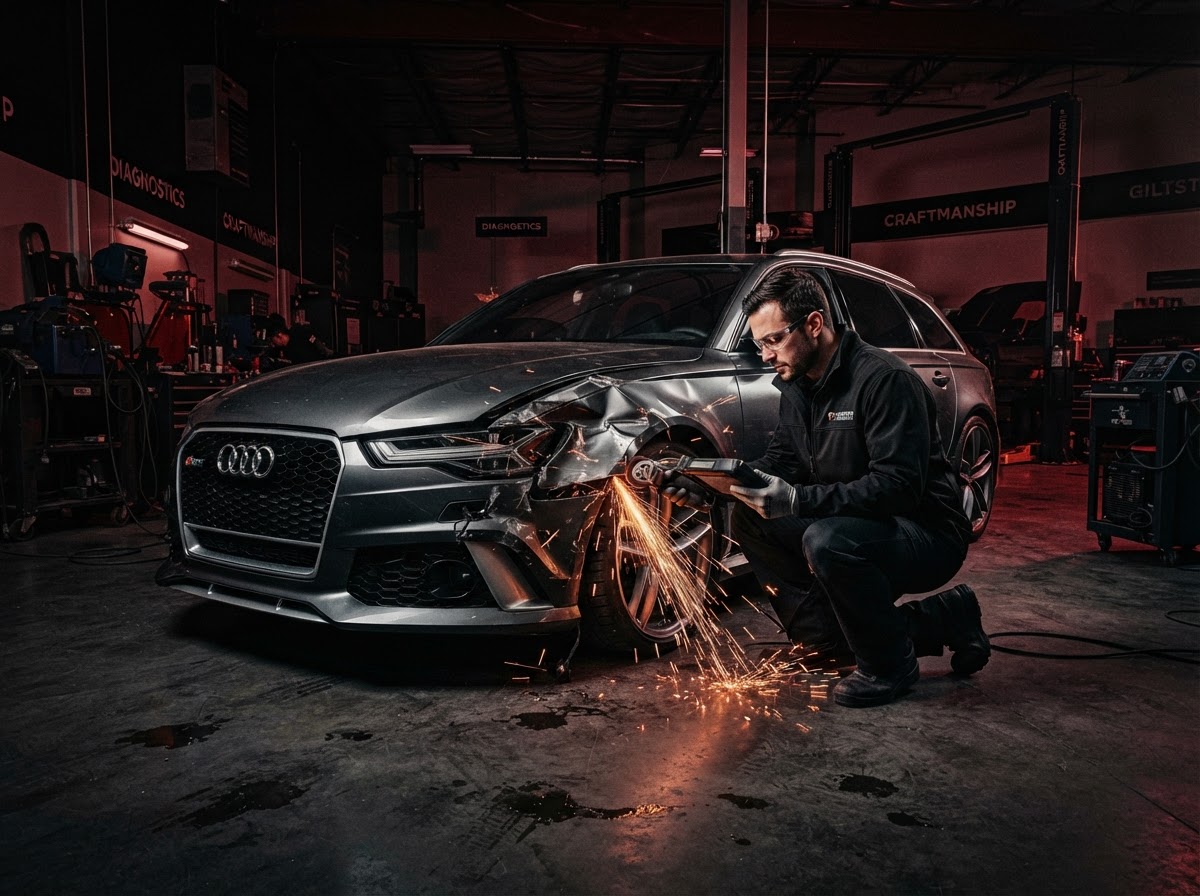
Collision repair can include initial damage inspection to determine what the repair may involve; body and collision damage repair to affected panels; removal and repair or replacement of damaged components; disassembly and reassembly of components needed for repair; and restoration of the vehicle's body and appearance following the collision. The exact tasks depend on what the inspection finds.
During the damage inspection we assess which components can be repaired and which should be replaced. Some damaged panels and parts can be straightened and refinished; others are more cost-effective or safer to replace. The decision depends on the type and extent of the damage and the condition of the affected component, and we explain what we recommend and why.
Where structural damage is involved, body straightening and pulling may be needed to bring the frame and body structure back toward its intended position before panel and refinishing work follows. Where panels have shifted, panel alignment restores even gaps and proper fit. Where paint is damaged, surface preparation, sanding, painting, color matching, and finishing bring the finish back. These steps fit together as part of one collision repair.
Repair Versus Replacement After a Collision
The repair-versus-replacement decision is made component by component. A panel that can be straightened and refinished may be repaired; a panel that is crushed, torn, or structurally compromised may be safer or more cost-effective to replace. A bumper with a small crack may be repairable; a shattered bumper may need replacement. The decision depends on the type and extent of the damage and the condition of the part.
We do not replace parts automatically, and we do not repair parts that should be replaced. The goal is the right outcome for each component — repair where repair restores it properly, replacement where the damage is beyond practical repair. We assess each part and explain the recommendation so you understand what is being done and why.
Parts availability can affect timing when replacement is recommended. We do not promise a fixed completion date in advance; the realistic timeline becomes clear after the inspection and as the work progresses. The scope and timing of a collision repair depend on the damage, the repair requirements, and parts availability.
Benefits and Limitations of Collision Repair
The benefit of collision repair is restoring your vehicle's body and appearance after an accident — bringing damaged panels, broken components, and affected finishes back toward their pre-collision condition. Done well, with a proper inspection and the right mix of repair, replacement, and refinishing, the work makes the damage disappear visually and restores the body's fit and function.
There are honest limits. Our goal is to restore your vehicle's body and appearance, but the result depends on the type and extent of the damage, the repair methods used, and parts availability. An in-person inspection is the most reliable way to assess what can be restored. We do not guarantee that every vehicle will look exactly as it did before the collision, and we do not perform mechanical, glass, or electronics work outside an approved body repair.
We also do not manage insurance claims or guarantee acceptance of any particular insurer. We can discuss your repair needs, but coverage and claim handling are between you and your insurer. Please confirm coverage and claim handling directly with your insurer.
Preparing for a Collision Repair Assessment
When you contact us, the more you can tell us about the damage, the better we can prepare. Useful information includes your vehicle's year, make, and model; a description of the damage and how it happened; which areas of the vehicle are affected; and any photos you have. Photos can help with an initial discussion, but they do not replace an in-person inspection.
If the damage followed an insurance claim, it helps to know where things stand with your insurer, though we do not manage the claim itself. If you are unsure what the full extent of the damage is, that is exactly what the assessment is for — the inspection determines what your vehicle needs rather than assuming the visible damage is the whole story.
An assessment request is an inquiry, not a confirmed appointment. After we see the vehicle we outline the recommended scope of work, what repair or replacement it may involve, and a realistic picture of timing. You can request an assessment by calling (786) 769-1309 or through our Contact page, in English or Spanish.
Why Consider RPC for Collision & Auto Body Repair
RPC Autobody Collision LLC specializes in repairing and restoring vehicles affected by accidents, impacts, or wear, with a focus on bodywork and exterior appearance. Collision damage repair, auto body repair, damage inspection, and restoration of the vehicle's appearance following a collision are at the center of what we do — without inventing credentials, warranties, or completion guarantees.
The recommendation stays tied to the inspection. We tell you what the repair may involve, what can be repaired versus replaced, and a realistic picture of timing — without diagnosing your vehicle remotely or promising a fixed completion date. The scope of work reflects what the inspection actually finds.
Our shop is at 8725 NW 117th St, Units 14–15, Hialeah, FL 33018. Customers from Hialeah, Hialeah Gardens, and the surrounding area come to us for collision and auto body repair. To request an assessment, call (786) 769-1309 or submit a request through our Contact page.
The Repair Process for Collision & Auto Body Repair
Understanding how a repair moves from first contact to collection helps you know what to expect. The steps below describe the general path for collision & auto body repair. The exact steps depend on what the inspection finds, but the overall path is consistent.
First is the damage assessment. We inspect the vehicle, check the visible damage and the areas around it, and identify the repair work it may need. The assessment is what turns a guess into a plan, and the recommended scope of work — including whether repair or replacement makes more sense for a given component — is based on that inspection and on parts availability.
Next comes the repair itself. Where panels are damaged, we repair or replace them; where the structure has shifted, we straighten and pull it back toward its intended position and re-measure; where components are bent, cracked, or broken, we repair or replace them based on their condition. Disassembly and reassembly are done where needed to access and repair the damage correctly, and we reassemble everything we take apart.
Then comes refinishing where paint is involved. Surface preparation, sanding, applying color, color matching, and finishing bring the repaired or replaced panels back to a consistent finish. Polishing and buffing remove suitable surface imperfections, and where damage is too deep for polishing alone, refinishing is used instead. The finishing step is what makes the repair disappear visually.
Finally, we review the completed work with you and arrange collection. We walk through what was done, answer questions, and provide any aftercare guidance specific to your repair and paint system. An assessment request is an inquiry, not a confirmed appointment, and the timeline becomes clear after the inspection and as the work progresses — we do not promise a fixed completion date in advance.
What to Expect When Contacting the Shop
When you reach out to RPC about collision & auto body repair, the conversation starts with what you are seeing and what happened. Your vehicle's year, make, and model helps us understand what is involved; a description of the damage — where it is, how it occurred, and how severe it looks — gives us a starting point. If you have photos, they can help with an initial discussion, though they do not replace an in-person inspection.
We will talk through the damage and what an assessment may involve, and arrange for the vehicle to be seen at the shop. The reliable scope of work comes from inspecting the vehicle in person, where the visible damage and the areas around it can be checked together. We do not diagnose a specific vehicle remotely or guarantee a particular outcome before the inspection.
After the assessment, we outline the recommended scope of work — what can be repaired versus replaced, what the refinishing involves if paint is part of it, and a realistic picture of timing. Pricing and timing depend on the damage, the repair requirements, and parts availability, so they are discussed based on the inspection rather than promised up front.
You can request an assessment in English or Spanish by calling (786) 769-1309 or through our Contact page. RPC Autobody Collision LLC is a single shop at 8725 NW 117th St, Units 14–15, Hialeah, FL 33018; there is no branch or mobile service. When you arrive at the complex, look for Units 14–15 — the unit numbers are what locate us inside the building.
Visiting RPC's Shop
RPC Autobody Collision LLC is a single shop at 8725 NW 117th St, Units 14–15, Hialeah, FL 33018. When you arrive at the complex, look for Units 14–15 — the unit numbers are what locate us inside the building. To request an assessment, call (786) 769-1309 or submit a request through our Contact page. An assessment request is an inquiry, not a confirmed appointment.
Request an Assessment
Contact RPC to discuss your vehicle and the repairs it may need. Call (786) 769-1309 or submit a request — an inquiry, not a confirmed appointment.
Request a Repair Assessment
RPC AUTOBODY COLLISION LLC
(786) 769-1309Get directions8725 NW 117th St, Units 14–15
Hialeah, FL 33018